
smartbuildingmag.com
19
'26
Written on Modified on
Printing Plant Ventilation Retrofit Halves Energy Consumption
Mayr Miesbach replaced a 40-year-old belt-driven fan with ebm-papst FanGrid units and RadiPac EC fans to stabilise indoor climate for print quality.
www.ebmpapst.com
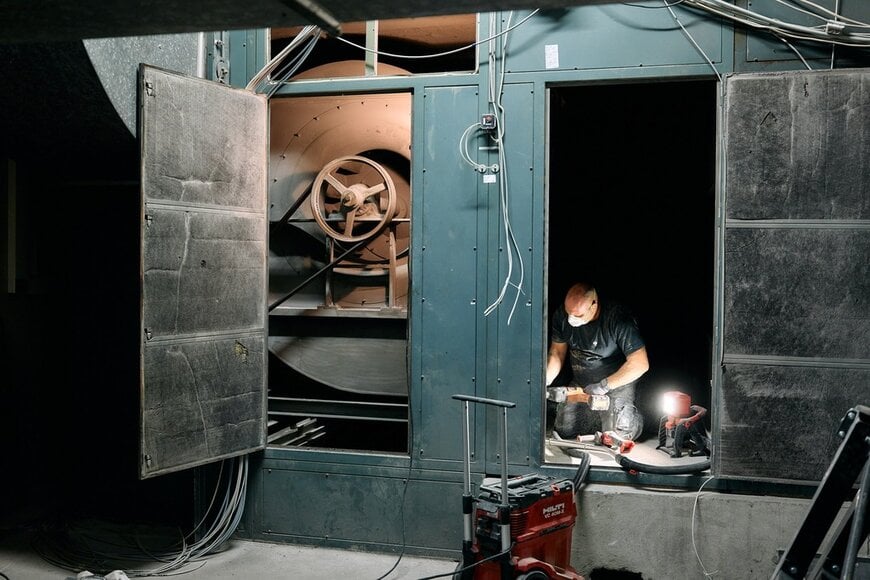
Industrial ventilation and printing: a retrofit at the printing company Mayr Miesbach replaced an ageing air handling system with EC fan technology, FanGrid units and building automation while production continued. In printing, small fluctuations in temperature and humidity directly affect print quality, so stable indoor climate control is a process requirement rather than a comfort feature.
Limitations of the Existing Ventilation System
The previous system had been in service for about 40 years and ran approximately 8,700 hours per year at an efficiency of 30 to 40 percent. It had no demand-based control and operated close to full load at all times. This increased energy consumption and mechanical wear, limited transparency over operating conditions and affected process stability.
Fan Array Technology Chosen for the Retrofit
The new installation consists of two FanGrid units, each equipped with six third-generation RadiPac EC centrifugal fans from ebm-papst. Together they deliver an airflow of 80,000 m³/h at about 800 Pa. The fan array principle provides redundancy: if one fan fails, the remaining fans take over its share of the load, so ventilation is maintained. System efficiency exceeds 70 percent, with up to 75 percent for each fan. Aerodynamically optimised impellers and the FlowGrid inlet guard grille reduce noise by 3 to 7 dB(A). Because EC motors are speed-controllable, the combination with building automation enabled demand-based operation for the first time at the site.
Three-Day Installation During Production
The old belt-driven AC fan weighed almost one metric ton. It was dismantled on site and lifted out by crane. Detailed planning, prefabricated wall and support structures and the compact dimensions of the fan modules allowed the work to be completed within three days without interrupting printing operations.
Energy Savings and Process Stability
Electrical energy consumption at the plant fell by about 50 percent. Temperature and humidity are now controlled more precisely and more stably, which supports consistent print quality. The reduction results from two mechanisms: the higher aerodynamic and motor efficiency of the EC fans compared with the old belt drive, and the ability to adjust airflow to actual demand instead of running continuously at full load.
Edited by Evgeny Churilov, Induportals Media - Adapted by AI.
www.ebmpapst.com
